


Lucas Jeep Chrysler Dodge RAM
2027 Jeep Specifications
South Jersey shoppers get 420 horsepower from the gas Hurricane engine in both 2027 Grand Wagoneer body lengths.
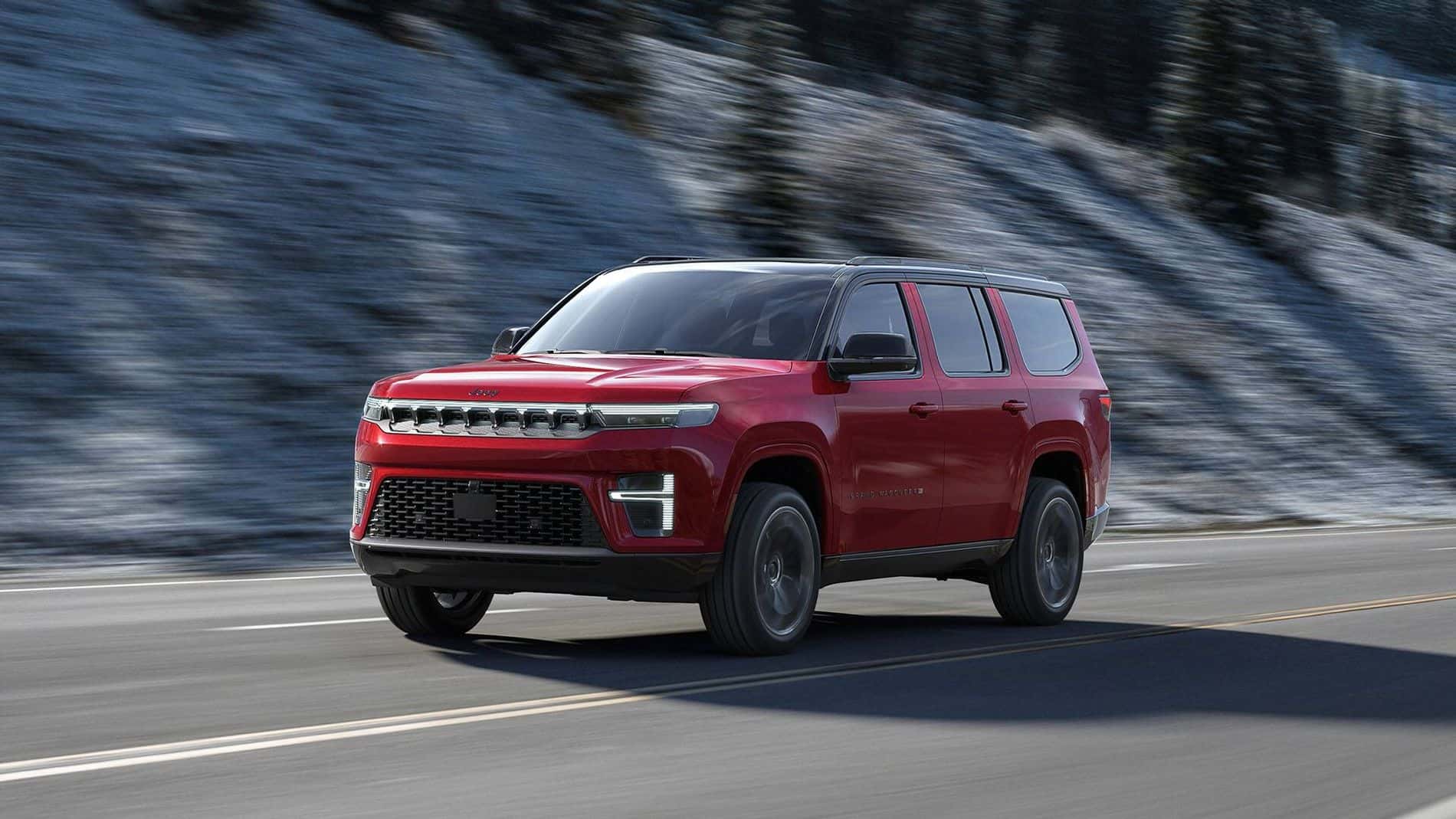
The gas Grand Wagoneer and Grand Wagoneer L share the same output and automatic transmission. The base model offers rear-wheel drive or 4×4. The factory Upland has a two-speed active transfer case and rear electronic limited-slip differential as part of its heavy-duty equipment. A 4×4 badge identifies the driven axles; the axle ratio and tow equipment determine which factory tow rating applies.
| Powertrain item | U.S. gas specification |
|---|---|
| Engine | 3.0L Hurricane twin-turbo inline-six |
| Horsepower | 420 hp |
| Torque | 468 lb-ft |
| Transmission | 8-speed automatic |
| Drive | Rear-wheel drive or four-wheel drive |
The Grand Wagoneer L stretches the body 12 inches and the wheelbase 7 inches. Jeep lists the same body width for both, so the extra length matters most when the rear bumper is close to a garage door or a parked car behind you. The published 83.6-inch body width excludes the mirrors.
| Dimension | Grand Wagoneer | Grand Wagoneer L |
|---|---|---|
| Overall length | 216.1 in | 228.1 in |
| Wheelbase | 123 in | 130 in |
| Body width | 83.6 in | 83.6 in |
| Overall height | 79.8 in | 79.7 in |
U.S. specifications put standard 4×2 minimum ground clearance at 9 inches. Jeep publishes a gas lineup curb-weight range of 5,730 to 6,444 pounds. The owner’s manual gives separate gross vehicle weight ratings for specific builds, including 7,300 pounds for the standard base 2WD and 7,700 pounds for the base L 4WD. A vehicle’s certification label gives the rating for that vehicle.
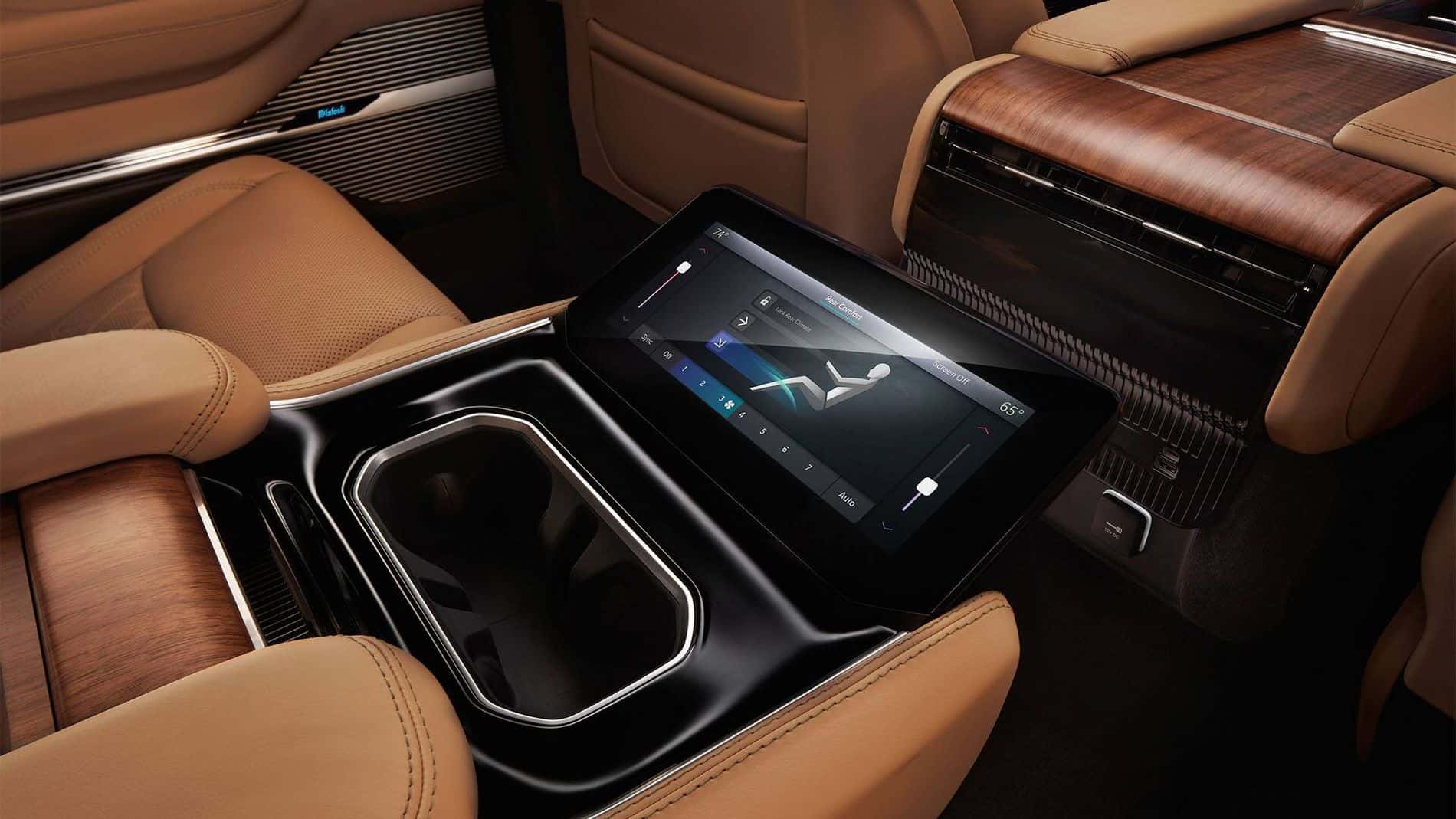
A second-row bench on eligible models gives you eight seats across three rows. Captain’s chairs give you seven and leave an aisle to the third row. Either body length accommodates those layouts. The L adds room behind the rear seats, a useful difference when passengers and gear share a ride from Burlington toward the Shore.
| Interior measure | Grand Wagoneer | Grand Wagoneer L |
|---|---|---|
| Maximum seating on eligible builds | 8 | 8 |
| Seating with captain’s chairs | 7 | 7 |
| Cargo behind third row | 27.9 cu ft | 42.6 cu ft |
| Cargo behind second row | 70.8 cu ft | 88.8 cu ft* |
| Cargo behind front row | 94.2 cu ft* | 116.7 cu ft* |
*Folded-seat cargo estimates marked with an asterisk agree across independent U.S. 2027 specification listings. Jeep publishes both third-row figures and the standard model’s cargo volume with its third row folded.
| Legroom by row | Grand Wagoneer | Grand Wagoneer L |
|---|---|---|
| Front | 40.9 in* | 40.9 in* |
| Second | 42.7 in* | 42.7 in* |
| Third | 36.6 in* | 36.6 in* |
*Independent U.S. 2027 specification listings agree on these legroom measurements. Both bodies have the same published legroom in those listings; the bigger difference is the space behind the third row. For a family with adults in back, the seating layout and room to get past the second row matter on either body.
| Trim | Factory wheel size and finish |
|---|---|
| Grand Wagoneer and Limited | 20-inch machine-face painted |
| Limited Altitude and Upland | 20-inch painted and polished |
| Overland | 22-inch premium painted and polished |
| Summit | 22-inch painted |
| Summit Obsidian | 22-inch dark finish |
| Summit Reserve | 22-inch painted |
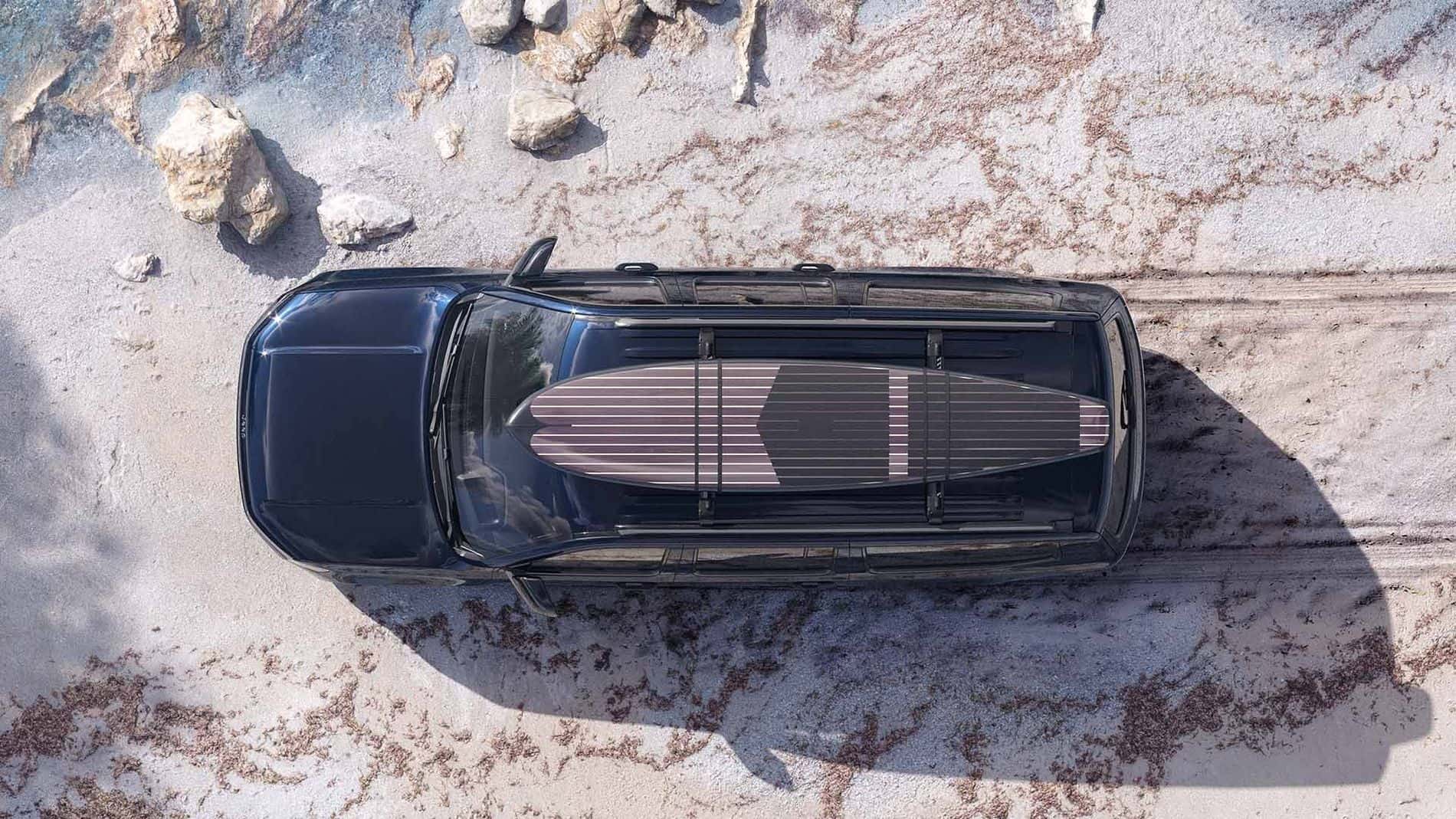
Limited also offers a 22-inch painted satin wheel. Upland combines its 20-inch wheels with all-terrain tires. The trim guide pairs those wheels with each trim’s seating, audio and towing equipment.
| Gas drivetrain and body | EPA city | EPA highway | EPA combined | Gas tank |
|---|---|---|---|---|
| Standard 2WD | 17 mpg | 22 mpg | 19 mpg | 26.5 gal |
| L 2WD | 17 mpg | 22 mpg | 19 mpg | 30.5 gal |
| Standard 4WD | 17 mpg | 21 mpg | 18 mpg | 26.5 gal |
| L 4WD | 16 mpg | 20 mpg | 18 mpg | 30.5 gal |
EPA gives both 2WD body lengths the same city and highway estimates. The two 4WD versions share their combined estimate, while the standard model has a one-mpg edge in both city and highway ratings. The L carries four additional gallons. That larger tank changes the distance between fuel stops, and the highway rating shows the fuel-use difference between the two 4WD builds.
The gas owner’s manual lists these tow and tongue limits for trailers at its 55-square-foot frontal-area basis. The standard-body 4WD with the 3.92 axle has the highest rating, while the L with the same axle is rated only 40 pounds lower. Passengers, cargo and tongue weight all count against the capacity of the loaded vehicle.
| Gas body, drive and axle | Max trailer weight | Max tongue weight |
|---|---|---|
| Standard 2WD, 3.55 axle | 6,150 lb | 598 lb |
| Standard 4WD, 3.55 axle | 5,970 lb | 597 lb |
| Standard 4WD, 3.92 axle | 10,000 lb | 1,000 lb |
| L 2WD, 3.55 axle | 5,980 lb | 598 lb |
| L 4WD, 3.55 axle | 5,760 lb | 576 lb |
| L 4WD, 3.92 axle | 9,960 lb | 996 lb |
| Trim | Equipment highlight |
|---|---|
| Grand Wagoneer | Heated and ventilated front seats; hands-free power liftgate |
| Limited | Heated second-row seats; power-folding exterior mirrors |
| Upland | Heavy-duty trailer tow package; steel skid plates and tow hooks |
| Overland | Air suspension; head-up display and surround-view camera |
| Summit | Front seat massage; four-zone climate control |
| Summit Reserve | Palermo leather; console cooler and front passenger screen |
Overland’s surround-view camera helps show where the front corners sit in a tight parking space. Factory window labels also list lane management, blind-spot detection and adaptive cruise control with stop and go. FamCam is a separate cabin view included on Upland, Summit, Summit Obsidian and Summit Reserve. One helps the driver see the area around the SUV at parking speed; the other shows the passengers in the rear rows.
| Factory warranty | Time | Mileage |
|---|---|---|
| Basic limited | 3 years | 36,000 miles |
| Gas powertrain limited | 5 years | 60,000 miles |
Coverage is subject to warranty terms and ends when the applicable time or mileage limit comes first. The factory maintenance schedule and Lucas service guide lists oil, filter and fluid intervals separately from warranty coverage.
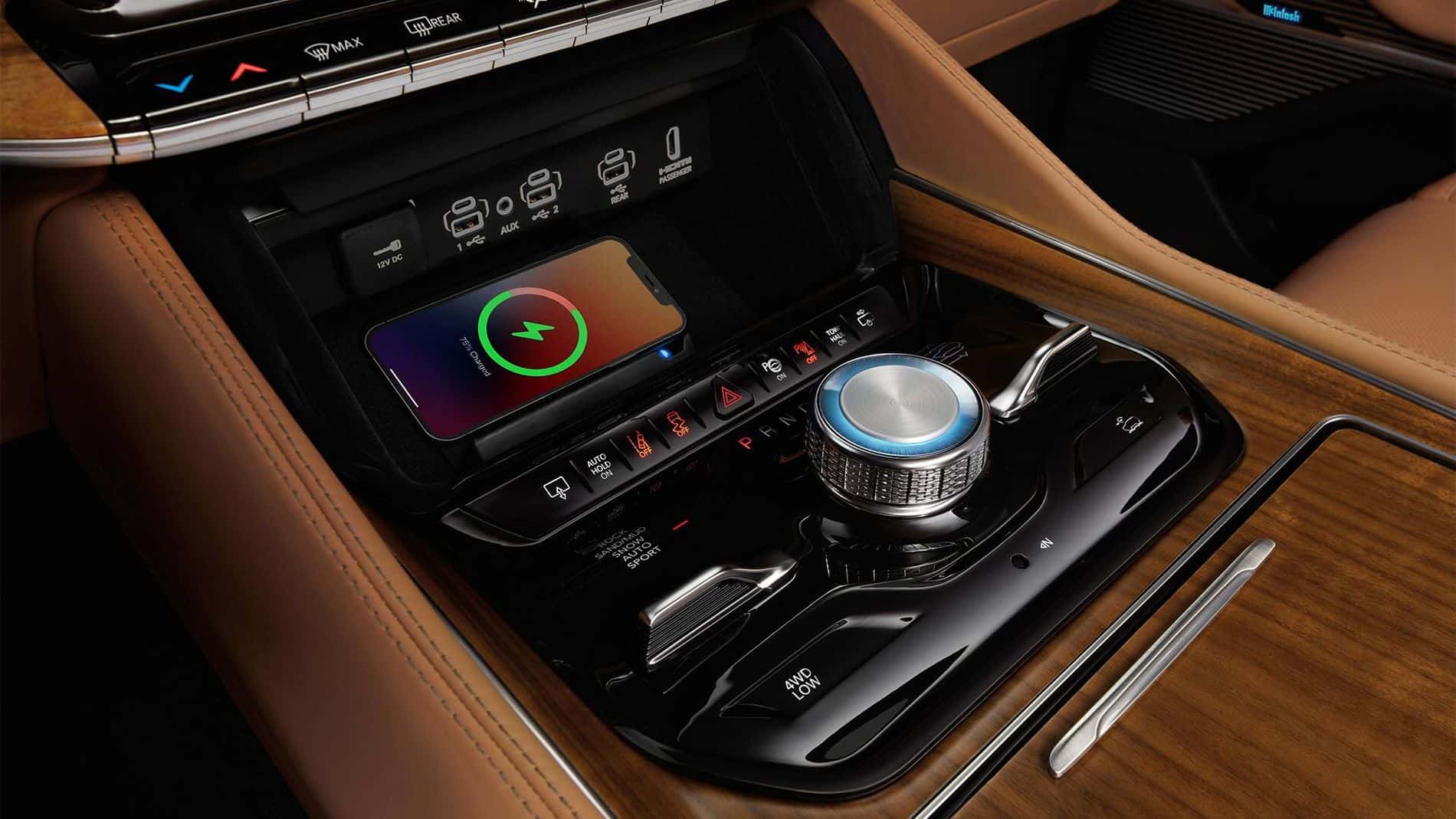
The L takes up one more foot of driveway or garage depth in Robbinsville or Mt Ephraim than the standard body. For a week at the Shore with passengers in all three rows, the L’s extra 14.7 cubic feet is usable with every seat upright. On drives toward Manahawkin, the L’s added length leaves more cargo room behind passengers in the third row.
For towing near Trenton or Cherry Hill, a standard 4WD gas model with the 3.55 axle is rated for 5,970 pounds, and the properly equipped 3.92 version is rated for 10,000 pounds. Those ratings differ substantially even with the same engine and body. Lucas Chrysler Jeep Dodge Ram is at 1624 NJ-38 in Lumberton, NJ. See Grand Wagoneer inventory for the body and drive types listed by the store.
The standard Grand Wagoneer has a 123-inch wheelbase. The Grand Wagoneer L has a 130-inch wheelbase. With the 3.92 axle and required tow equipment, the manual rates the standard 4WD at 10,000 pounds and the L 4WD at 9,960 pounds.
The gas Grand Wagoneer L holds 30.5 gallons. The standard gas Grand Wagoneer holds 26.5 gallons, according to the owner’s manual. Both L drive systems have the bigger tank, even though their EPA city and highway estimates differ with drivetrain.
The standard 4WD is rated at 17 city and 21 highway mpg. The L 4WD is rated at 16 city and 20 highway mpg. EPA lists both at 18 mpg combined, so the city and highway numbers show the difference between the two.
The owner’s manual lists 597 pounds for the standard 4WD with the 3.55 axle and 1,000 pounds for the standard 4WD with the 3.92 axle under the stated trailer rating conditions. The loaded vehicle must also stay within its own weight limits.
No. Jeep lists the Grand Wagoneer L at 79.7 inches high and the standard body at 79.8 inches. The L is longer, at 228.1 inches versus 216.1. The two models have the same 83.6-inch body width, so the larger difference for a garage is in depth.
Jeep publishes a curb-weight range of 5,730 to 6,444 pounds for the lineup. The body length, drivetrain and equipment affect the number. Gross vehicle weight rating is the separate limit for the loaded vehicle. It is printed on the factory certification label for that SUV.
Jeep lists 70.8 cubic feet with the standard body’s third row folded. With the third row upright, the standard body has 27.9 cubic feet behind it. That extra cargo space is available while the first two seating rows stay upright.
Explore the Grand Wagoneer
Next Step
Lucas Chrysler Jeep Dodge Ram · 1624 NJ-38, Lumberton, NJ 08048 · (609) 354-5619.


