



Lucas Jeep Chrysler Dodge RAM
2027 Full-Size SUV Comparison
South Jersey shoppers comparing the 2027 Grand Wagoneer with Ford Expedition get more cargo volume behind the third row in either Jeep body length.
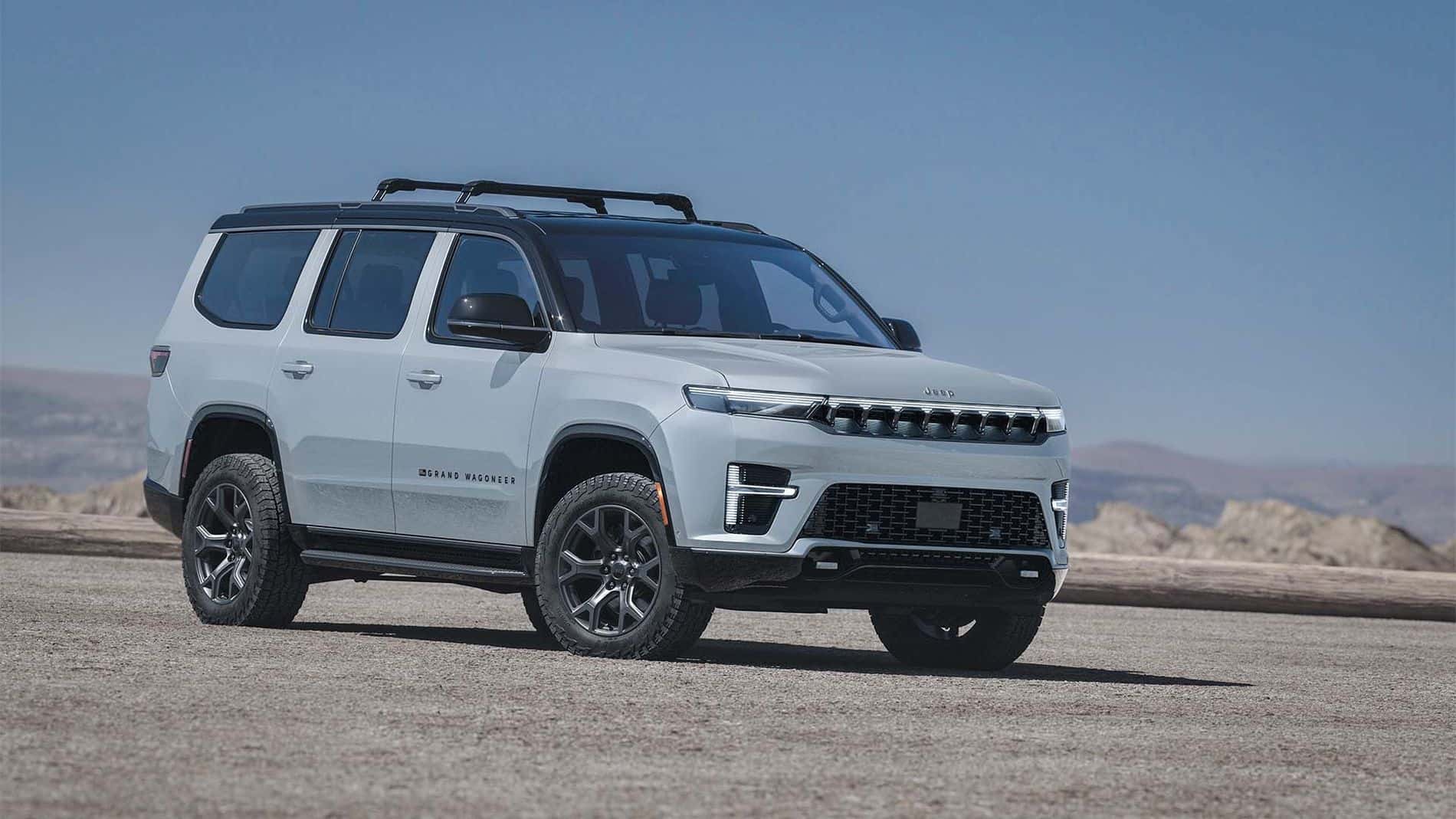
The Jeep advantage shows up when the third row is occupied. The standard Grand Wagoneer has 27.9 cubic feet behind it, compared with Ford’s published 22.9 cubic feet for Expedition. The Grand Wagoneer L has 42.6 cubic feet there versus 37.4 for Expedition MAX. The L’s 42.6 cubic feet of cargo space is available with all three rows occupied on a trip through Manahawkin to Long Beach Island.
| Body and comparison | Grand Wagoneer | Ford Expedition |
|---|---|---|
| Standard-body third-row cargo | 27.9 cu ft | 22.9 cu ft |
| Long-body third-row cargo | 42.6 cu ft | 37.4 cu ft |
Jeep’s standard body adds 5.0 cubic feet behind the last row over the standard Ford. The L opens up 5.2 cubic feet more than Expedition MAX by the same comparison. The standard Jeep opens up 70.8 cubic feet with the third row folded, while the L keeps more space behind an occupied third row on trips from Cherry Hill or Burlington.
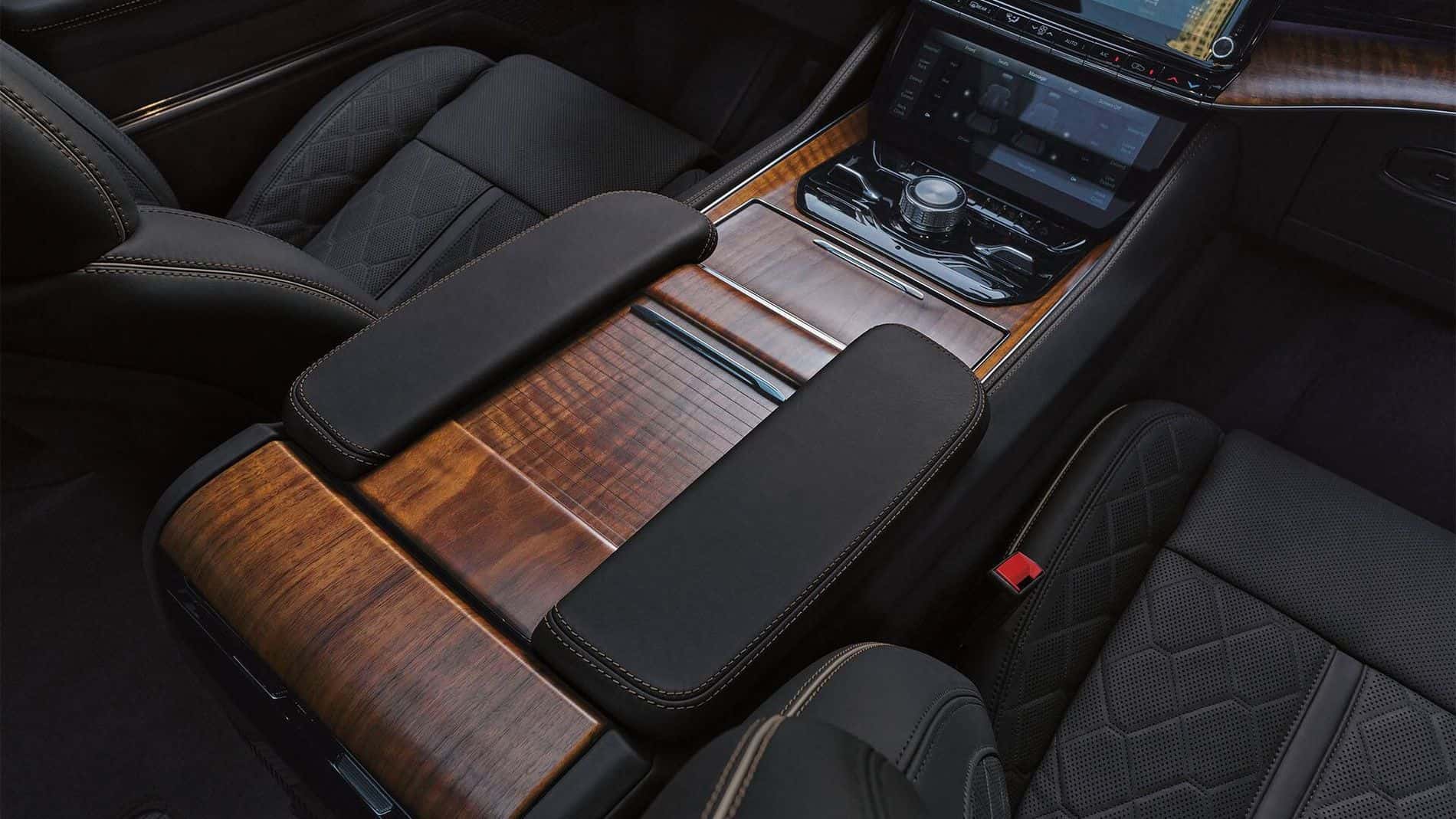
The gas Grand Wagoneer uses a 3.0-liter Hurricane twin-turbo six with 420 horsepower and 468 lb-ft. Its eight-speed automatic comes with rear-wheel drive or 4×4 in the base model.
| Maximum properly equipped gas 4×4 towing | Grand Wagoneer | Ford Expedition |
|---|---|---|
| Standard body | 10,000 lb | 9,600 lb |
| Long body | 9,960 lb | 9,000 lb |
The Jeep figures are for the 3.92 axle with the required equipment. The Expedition figures are the benchmarks for Ford’s Heavy-Duty Trailer Tow Package. A standard Grand Wagoneer 4×4 with the 3.55 axle has a 5,970-pound rating in the factory table. For towing near Burlington or Trenton, the SUV’s loading label and its factory tow rating apply together. The Upland has Jeep’s heavy-duty tow hardware from the factory.
EPA estimates 17 city and 21 highway mpg for the standard Grand Wagoneer 4WD, and 16 city and 20 highway mpg for the L 4WD. The Grand Wagoneer specs break out EPA ratings, tank sizes, axle ratios and tow limits for both 2WD and 4WD builds.
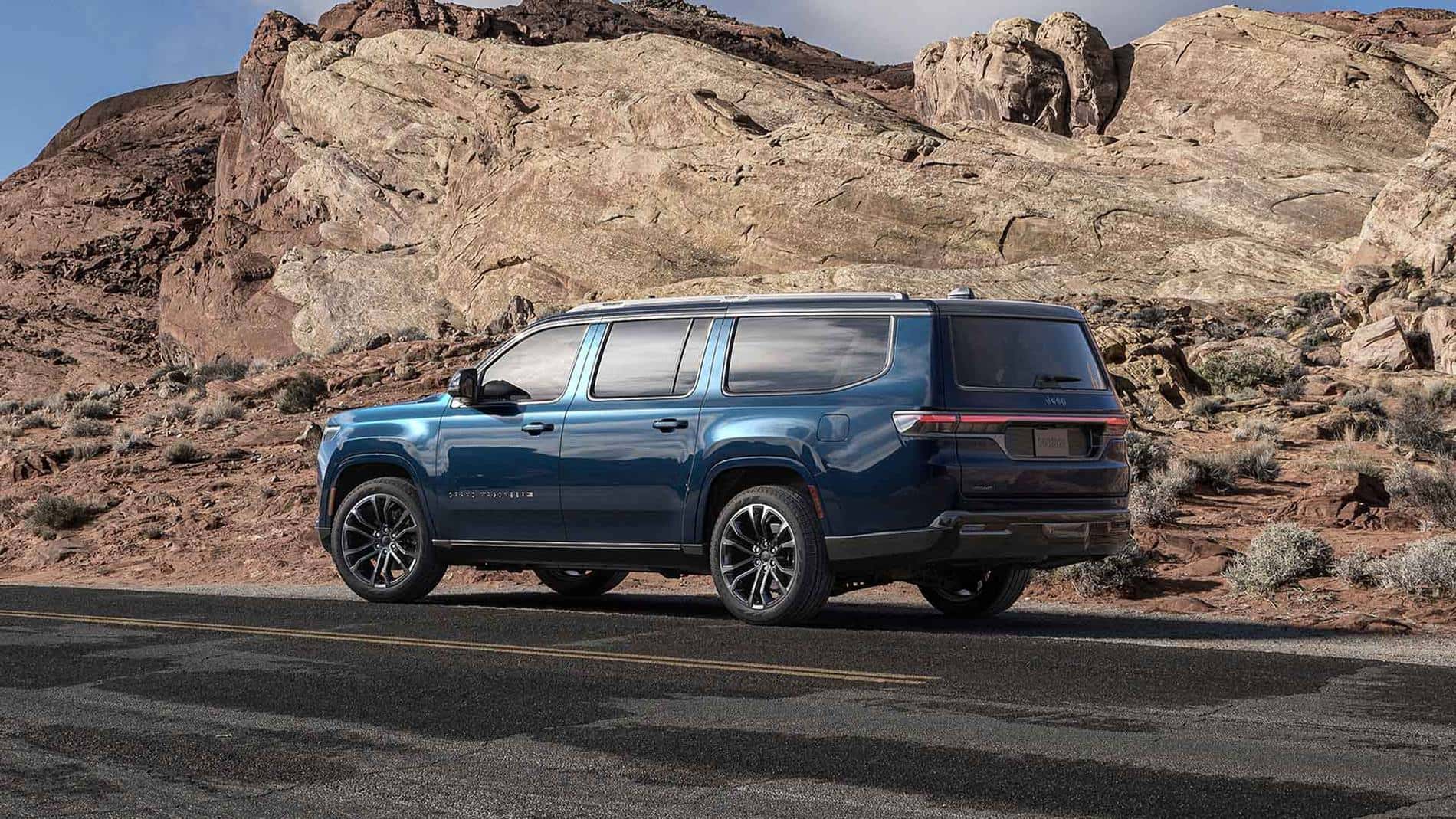
The Grand Wagoneer carries more behind the third row in each body-length match. That matters if a trip to the local shopping center or a week away uses every seat. The optional second-row bench on eligible trims seats up to eight; captain’s chairs seat seven and open an aisle to the back. The long Jeep adds room for bags behind the last row without making either layout give up a seat.
Upland, Summit, Summit Obsidian and Summit Reserve include dual-view FamCam. A look at the rear rows on the front display is useful on a longer family drive. In the Summit Reserve, the passenger screen, console cooler and Palermo leather change what the cabin offers without changing the body-length decision.
The base standard-body Grand Wagoneer 4×2 starts at $65,000 MSRP before destination and options. That includes heated and ventilated front seats, a heated steering wheel, a navigation touchscreen and a hands-free power liftgate. The $68,000 MSRP base L 4×2 adds the longer body. The Jeep trim comparison puts the upgrade cost next to equipment for each gas build.
The standard Jeep suits a garage in Mt Ephraim or Robbinsville where space is tight. The L has more room for luggage if a daily commute is only part of the job and the third row stays in use on family trips. The standard Upland includes the 3.92 axle and heavy-duty towing hardware from the factory.
Jeep’s basic limited warranty is 3 years or 36,000 miles, whichever comes first. In Lumberton, shop Grand Wagoneer inventory or contact the store about a particular body length, seat layout or tow package.
The Grand Wagoneer L has 42.6 cubic feet behind the third row versus 37.4 in the Expedition MAX, a difference of 5.2 cubic feet on the published figures. The extra space is usable while passengers are still sitting in the third row.
The standard-wheelbase gas Jeep 4×4 with the 3.92 axle can tow up to 10,000 pounds when properly equipped. The properly equipped standard Expedition 4×4 sets the comparison benchmark at 9,600 pounds. Jeep’s Upland includes the heavy-duty tow package from the factory, with a two-speed active transfer case.
The Grand Wagoneer L is Jeep’s extended-body counterpart to Expedition MAX. The L is 228.1 inches long and holds 42.6 cubic feet behind the third row. The extra rear cargo space is available with all three rows occupied on South Jersey family trips.
The $65,000 starting factory MSRP before destination and options buys the standard gas Grand Wagoneer 4×2 with heated and ventilated front seats, a heated steering wheel and navigation. The base model also includes a hands-free power liftgate for loading the rear cargo area.
The properly equipped Grand Wagoneer L gas 4WD with the 3.92 axle is rated at up to 9,960 pounds. The properly equipped Expedition MAX 4×4 is the 9,000-pound benchmark. The Jeep’s corresponding factory tongue-weight limit is 996 pounds, and that weight counts toward the SUV’s load.
The standard body gives you 27.9 cubic feet behind the third row and measures 216.1 inches long. That is a useful balance for a driver who sometimes needs all three rows and wants a foot less vehicle than the L in a garage.
The Grand Wagoneer L adds 14.7 cubic feet behind the third row over the standard Jeep. It lets you keep the back bench upright and carry more bags. An eligible L with the second-row bench seats up to eight and still has 42.6 cubic feet behind the third row.
Explore the Grand Wagoneer
Next Step
Lucas Chrysler Jeep Dodge Ram · 1624 NJ-38, Lumberton, NJ 08048 · (609) 354-5619.


