



Lucas Jeep Chrysler Dodge RAM
2027 RAM 2500 • LUCAS CDJR
Read configuration-specific measurements, capacities and powertrain details.
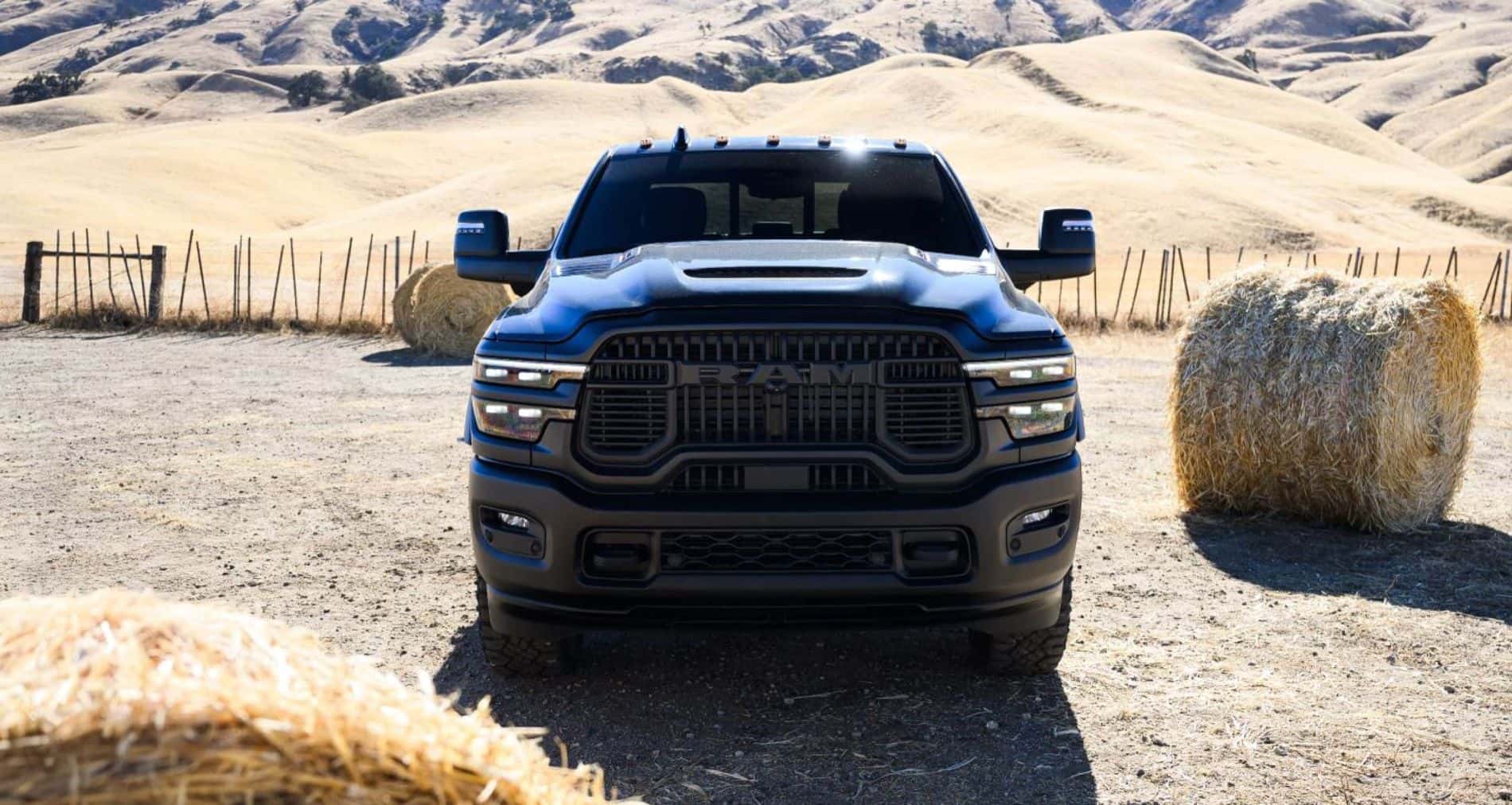
South Jersey buyers can choose a 2027 Ram 2500 with a 405-horsepower 6.4-liter HEMI V8 or a 430-horsepower 6.7-liter High-Output Cummins diesel. Regular Cab, Crew Cab and Mega Cab bodies create different passenger, bed and parking requirements. The tables below identify their example configurations rather than presenting one set of dimensions as the specification of every truck. Visit the buying overview and complete trim guide for the equipment decisions around those numbers.
The gas V8 pairs with an eight-speed automatic. It suits buyers who want gas-engine ownership and a configuration matched to their carried load. Engine output alone does not determine the truck’s payload or trailer rating.
The turbocharged inline-six uses the TorqueFlite HD eight-speed automatic. Its torque peak occurs at a lower engine speed than the gas engine’s, an important distinction for loaded operation. Engine and transmission choice should be considered together.
| Powertrain | Horsepower | Torque | Transmission |
|---|---|---|---|
| 6.4-liter gas V8 | 405 hp at 5,600 rpm | 429 lb-ft at 4,000 rpm | 8-speed automatic |
| 6.7-liter HO diesel I6 | 430 hp at 2,800 rpm | 1,075 lb-ft at 1,800 rpm | TorqueFlite HD 8-speed automatic |
Width is body width, excluding the mirrors; mirror position and equipment affect the space the truck needs. For a garage or worksite entrance, measure the actual truck and allow room for doors, mirrors and clearance rather than treating body width as a parking-space recommendation.
| Example configuration | Length | Body width | Height | Wheelbase |
|---|---|---|---|---|
| Tradesman gas Regular Cab 4×2, 8-foot box | 232.0 in | 79.4 in | 78.0 in | 140.5 in |
| Laramie gas Crew Cab 4×2, 6-foot-4-inch box | 238.8 in | 79.5 in | 78.2 in | 149.0 in |
| Laramie diesel Mega Cab 4×4, 6-foot-4-inch box | 249.9 in | 79.5 in | 80.1 in | 160.5 in |
| Limited gas Crew Cab 4×2, 8-foot box | 260.8 in | 79.4 in | 80.1 in | 169.0 in |
For ground clearance, the base Tradesman Regular Cab 4×2 is listed at approximately 7 inches at the front and rear. That is a configuration-specific reference, not the clearance of an off-road package. The curb-weight examples below also depend on their stated cab, box, drive and engine. Added equipment changes the actual truck weight.
| Base configuration | Engine | Published base curb weight |
|---|---|---|
| TRADESMAN REGULAR CAB 4X2 8′ BOX | 6.4-liter gas | 6,066 pounds |
| BIG HORN REGULAR CAB 4X2 8′ BOX | 6.4-liter gas | 6,135 pounds |
| BLACK EXPRESS CREW CAB 4X2 6’4″ BOX | 6.4-liter gas | 6,394 pounds |
| WARLOCK CREW CAB 4X4 6’4″ BOX | 6.4-liter gas | 6,680 pounds |
| LARAMIE CREW CAB 4X2 6’4″ BOX | 6.4-liter gas | 6,487 pounds |
| REBEL CREW CAB 4X4 6’4″ BOX | 6.4-liter gas | 7,008 pounds |
| POWER WAGON CREW CAB 4X4 6’4″ BOX | 6.4-liter gas | 7,032 pounds |
| LIMITED CREW CAB 4X2 8′ BOX | 6.4-liter gas | 6,964 pounds |
| LONGHORN CREW CAB 4X2 8′ BOX | 6.4-liter gas | 6,964 pounds |
Crew Cab and Mega Cab provide separate rear seating areas. Mega Cab adds rear-seat legroom and a different folding arrangement; Regular Cab instead concentrates its passenger space in the front row. A nominally larger cab does not guarantee every bag or child seat fits the way you expect.
| Measurement | Regular Cab example | Crew Cab example | Mega Cab example |
|---|---|---|---|
| Front legroom | 40.9 in | 40.9 in | 40.9 in |
| Rear legroom | No rear seating row | 40.2 in | 43.1 in |
| Front headroom | 39.8 in | 40.9 in | 40.9 in |
| Rear headroom | No rear seating row | 39.8 in | 40.3 in |
| Passenger volume | 62 cu ft | 125 cu ft | 130 cu ft |
The short and long boxes differ substantially in usable floor length. Check the shape of the cargo and the tie-down plan as well as the volume. Equipment such as bed storage systems can change usable space, so these conventional-box measurements should not be substituted for a physically different storage configuration. The towing and payload guide separates truck-loading limits from bed size.
| Conventional box measurement | 6-foot-4-inch box | 8-foot box |
|---|---|---|
| Internal floor length | 76.3 in | 98.3 in |
| Minimum box width | 51.0 in | 51.0 in |
| Maximum box width | 66.4 in | 66.4 in |
| Box depth | 20.2 in | 20.2 in |
| Cargo volume | 57.5 cu ft | 74.7 cu ft |
The base gas Laramie Crew Cab 4×2 short-box example has a 10,000-pound GVWR and a published 3,510-pound payload. These describe that configuration; they do not convert bed volume into a weight allowance. Payload also includes occupants and other carried equipment. Consult the actual truck labels before loading.
The selected base Tradesman uses 17-inch styled steel wheels; Big Horn uses 18-inch aluminum wheels. Laramie also has an 18-inch base wheel, while several appearance and premium configurations use 20-inch wheels. The gas Power Wagon selected configuration uses 17-inch aluminum wheels. All examples have four-wheel disc brakes. Wheel diameter alone does not establish tire load capacity or traction suitability.
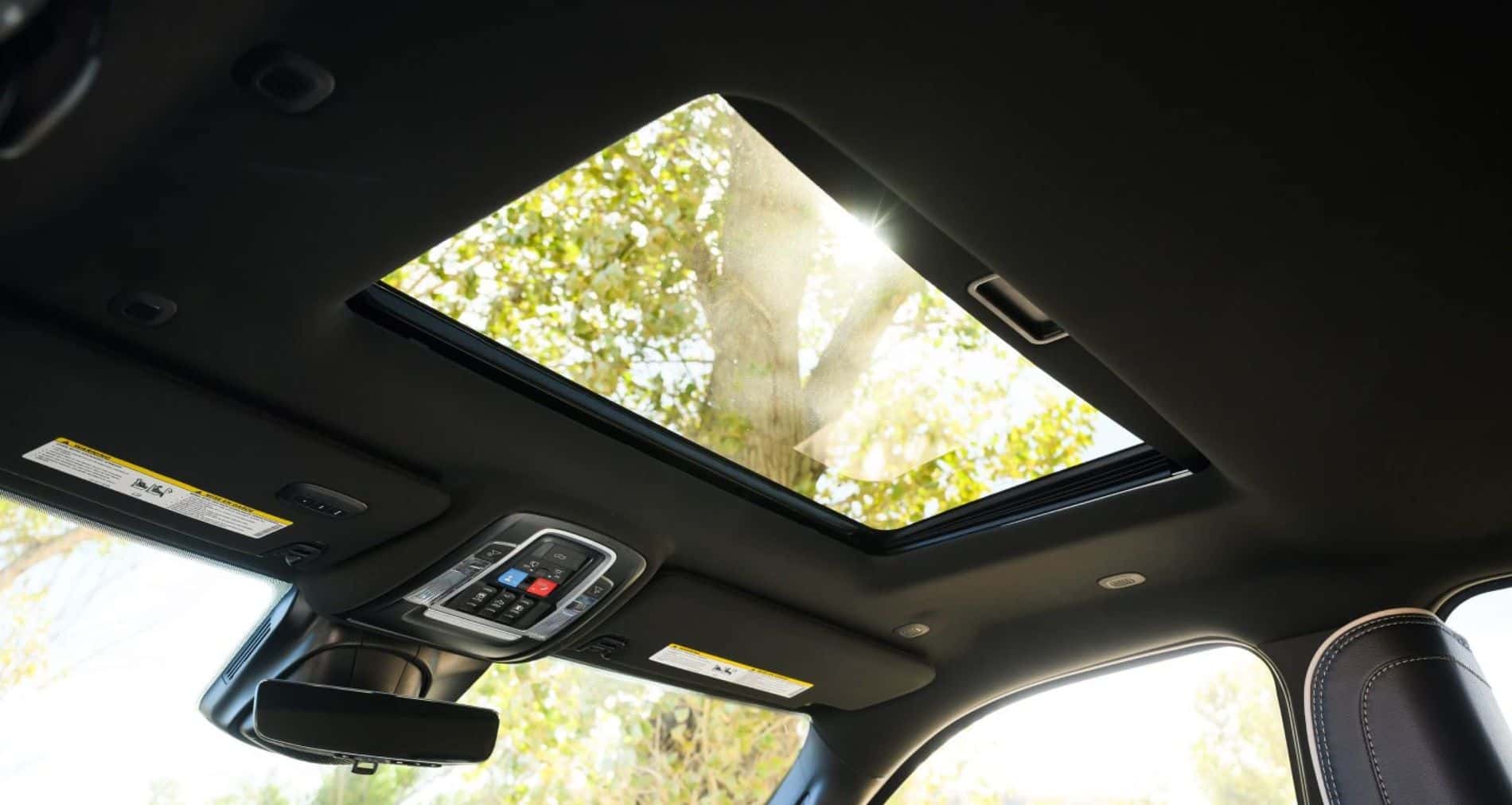
The Ram 2500 falls within the federal heavy-duty fuel-economy testing exemption. It therefore has no light-duty EPA city/highway MPG rating to multiply into a promised range. Tank size depends on configuration: the short-box Crew Cab examples use a 31-gallon tank, while the identified Regular Cab and long-box Crew Cab gas examples use 32 gallons. A 50-gallon tank is available on Crew Cab trucks with the 8-foot bed.
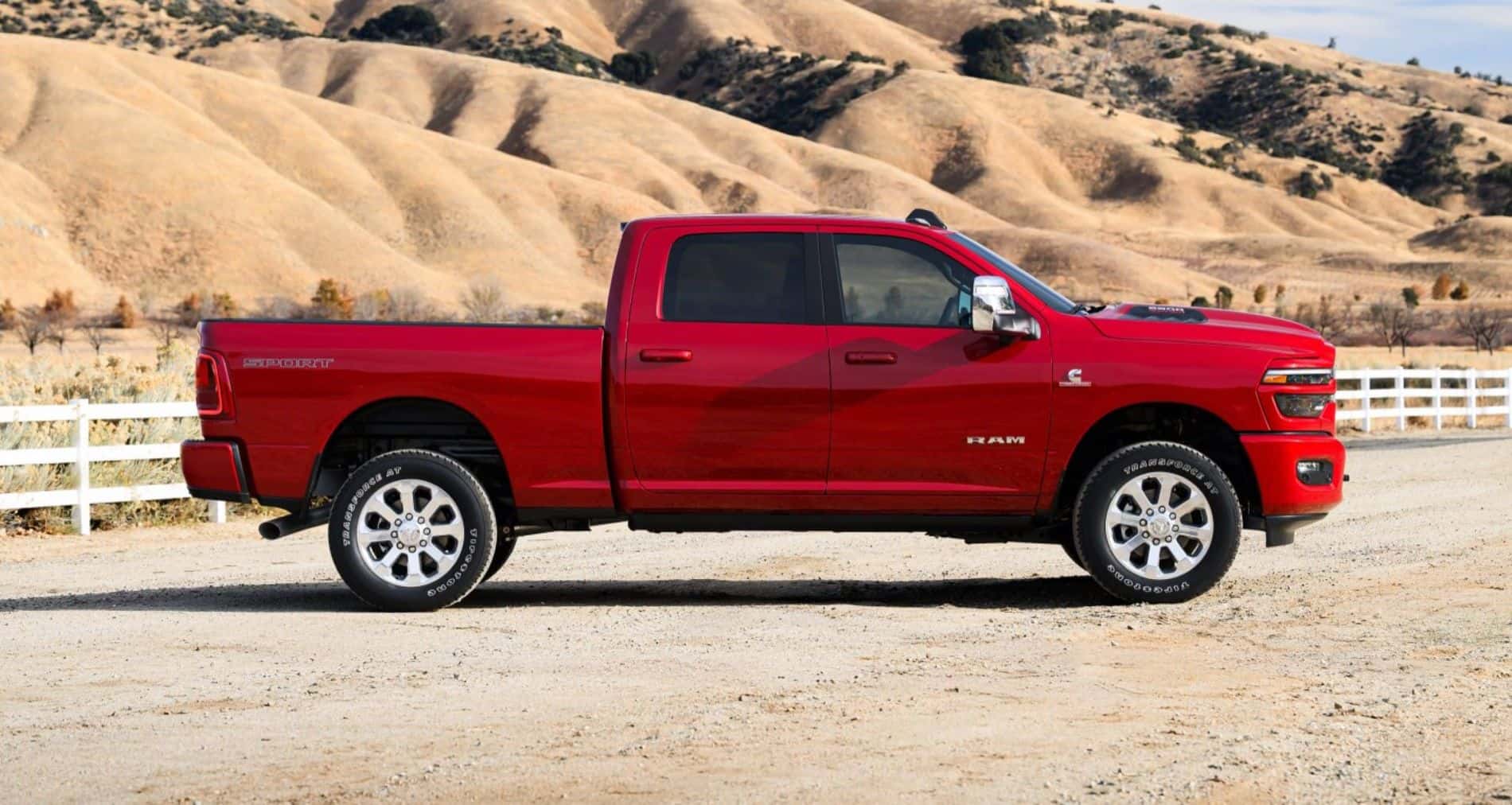
Use the cabin direction below to decide which trucks merit a closer look. Exact packages determine the final equipment. The trim guide explains the complete equipment choices.
| Trim | Selected base cabin feature |
|---|---|
| Tradesman | Vinyl front bench |
| Big Horn | Cloth front bench |
| Black Express | Cloth bench and dark appearance package |
| Warlock | Cloth bench with off-road package |
| Laramie | Leather-trimmed seating |
| Rebel | Heated cloth power bench |
| Power Wagon gas | Heated cloth power bench |
| Limited | Premium leather bucket seats |
| Limited Longhorn | Filigree leather seating |
Adaptive cruise control supports a driver-selected following distance, while forward collision warning with active braking provides collision-related assistance. Available LaneSense lane departure warning with lane keep assist and surround-view cameras add other functions. Aids require attentive operation and do not change weight ratings. Have the settings demonstrated before depending on them during a loaded trip.
Time or mileage limits end at whichever occurs first. Covered components, use restrictions and exclusions apply; review the warranty terms for the truck.
| Coverage | Gas | Diesel |
|---|---|---|
| Basic limited warranty | 3 years / 36,000 miles | 3 years / 36,000 miles |
| Powertrain | 5 years / 60,000 miles | 5 years / 100,000 miles |
| Corrosion perforation | 5 years / 100,000 miles | 5 years / 100,000 miles |
| Roadside assistance | 5 years / 60,000 miles | 5 years / 100,000 miles |
The service and maintenance guide explains how to plan routine ownership work separately from covered repairs.
On I-295, a long box serves a different job than a compact parking space alongside Route 130. Choose the body for the assignment, then check where you will keep it. Cherry Hill and Burlington buyers can bring parking measurements, while Mt Ephraim and Robbinsville shoppers can bring the equipment dimensions that determine a suitable box.
| Decision | Useful implication |
|---|---|
| Garage depth | A 238.8-inch Crew Cab needs almost the entire length of a 20-foot bay before allowing clearance. |
| Long-box parking | The 260.8-inch Crew Cab example exceeds a 20-foot bay. |
| Rear passenger room | The Mega Cab example has 43.1 inches of rear legroom compared with 40.2 in the Crew Cab example. |
| Cargo fit | Check the 51-inch minimum conventional-box width against the cargo footprint, then plan securement. |
Cab and box combinations create different overall lengths and wheelbases. The tables identify examples so each measurement has a body configuration attached. Compare the body on the inventory listing with the table rather than assigning the longest or shortest dimension to every trim.
The listed body widths exclude the mirrors. Mirror equipment and position affect total width in use. Measure the truck with the mirror position required for your driving and allow practical clearance for a gate, garage or loading area.
It describes the identified base truck’s weight rather than its loaded working weight. Options, accessories and carried items change the result. Use the actual labels and an appropriate weighing process for loading decisions; do not substitute a generic curb figure for a truck-specific payload allowance.
Compare the material’s dimensions with the internal bed length and width, then plan support and securement. Bed volume alone does not describe the fit of a long rigid item. Storage equipment and liners can also affect usable space.
Mega Cab emphasizes passenger space and uses the 6-foot-4-inch box. A Crew Cab with the 8-foot box is the relevant long-box alternative. Choose between those body arrangements based on both the rear-seat needs and the cargo dimensions.
Tank capacity is only one part of the calculation. Actual fuel use changes with engine, load, speed, idling and conditions. Heavy-duty testing exemption also means there is no light-duty EPA MPG number for this truck to support a guaranteed range claim.
Bring the garage opening, parking depth and cargo dimensions that constrain the purchase. Inspect mirror position, step access and the actual box equipment. Those practical checks connect the specifications with how the truck will be used.
The 2026 Ram 2500 overview covers the previous model year. Identify the year and configuration before applying a measurement or equipment description. This page’s tables describe the stated 2027 examples.
Explore the Ram 2500
Next Step
Tell us how you will use it and we will point you at the right configuration on the lot.


